
How Friendships Promote Joy in Science


Friendship, natural sciences, and a passion for experimentation are three essential factors in the lives of young people. Exploring nature together and conducting exciting experiments can not only enhance learning but also strengthen the connections between friendships. These thrilling experiences create memories and encourage young people to feel more independent and creative.
Young people are in a crucial phase of their lives where they discover themselves and develop their interests. Friendships play a central role here, as they not only provide support but also create incentives to actively learn and experiment. Shared experiences within a familiar friendship circle often make learning an exciting and motivating experience. In this context, the natural sciences can offer a fascinating platform to promote such learning.


Teamwork in Nature
Experimenting in nature brings friends closer together. When you are outdoors with your friends exploring the world around you, every discovery becomes a shared experience. Whether it's collecting plants, observing animals, or conducting simple chemical experiments in the kitchen – learning natural sciences is significantly enriched through teamwork. You not only share knowledge but also the joy of small successes. These experiences not only strengthen friendship but also help develop a deeper understanding of nature and its processes.

Collaborative experimentation also promotes communication skills. When you work on a project with your friends, you learn to express your thoughts, listen, and reach compromises. Scientific questions often require critical thinking and creativity, which are enhanced through discussions among friends. Additionally, discussions about the results often arise, prompting everyone to share their perspectives and learn from one another.
Curiosity and Desire to Discover
Friendships often encourage curiosity and trying new things. For instance, if your friend has a special interest in astronomy and gets you excited about the night sky, it may lead to both of you buying a telescope and exploring the secrets of the universe together. This kind of encouragement is essential to support learning and ignite a passion for science. Learning together with friends not only makes it more exciting but also much more fun.

Experimenting with friends can also help reduce anxiety. Many young people feel pressured when they have to learn complex topics alone. However, in a supportive environment fueled by friendship, everyone feels more secure. You can tackle difficult subjects together and find courage to face new challenges. Such experiences not only aid in learning but also strengthen the emotional bonds that define friendships.
Learning Through Play
Games and experiments in a friendly atmosphere can be combined to make the learning process even more exciting. Think of all the different scientific projects that can be carried out in the form of experiments or games, whether they are chemistry kits, physics experiments, or model building. Through playful learning, understanding of various concepts is deepened and a joy for learning is evoked. Working together on an experiment can be a lot of fun and simultaneously provide valuable learning experiences.
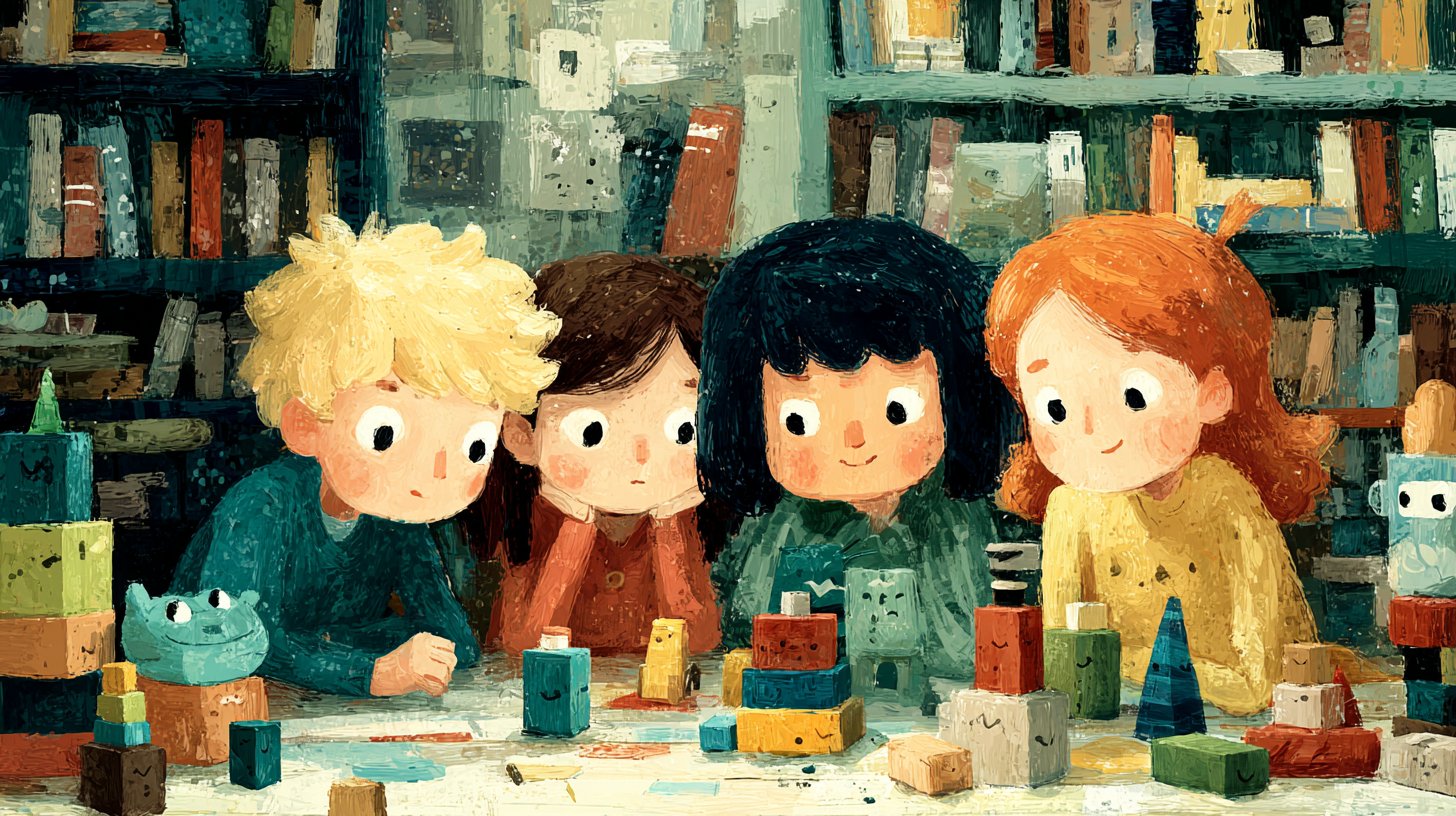
Friends help each other learn from mistakes and develop new ideas. It’s important that you not only celebrate successes but also foster curiosity and the desire to discover. Games and experiments create memories that last a long time, and learning becomes an adventure that is better not experienced alone.
Friendships and experimental physics are somewhat like a constantly evolving laboratory where ideas are tested and exchanged. The dynamics among friends create a unique and valuable learning environment that has the potential to foster not only individual growth but also long-lasting relationships.
In conclusion, it can be said that friendships can form the foundation for a passion for experimentation among young people. Joint exploration, learning, and experimenting are not only essential for personal growth, but also contribute to strengthening relationships and expanding knowledge. But the most important thing remains: Learning is more fun together!